
When choosing jewelry for a collection, the plating process is just as important as the design and base material. The same stainless steel jewelry can have very different performance depending on how its surface color and finish are created.
Two common technologies used in jewelry manufacturing are water plating (electroplating) and vacuum plating, also known as PVD (Physical Vapor Deposition).
Both methods can produce attractive finishes and a wide range of colors. However, for stainless steel jewelry—especially products designed for long-term use—vacuum plating offers several important advantages in durability, consistency, and production quality.
In this article, we compare the two processes and explain why PVD vacuum plating is becoming an increasingly preferred choice for stainless steel jewelry.
What Is Water Plating?
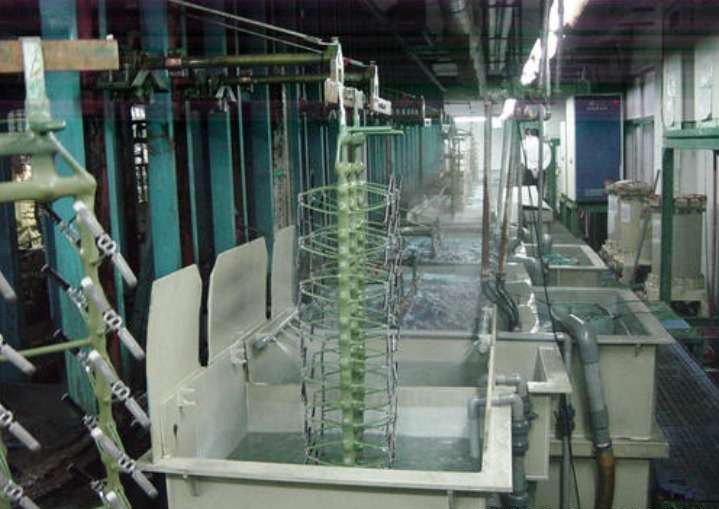
Water plating, commonly known as electroplating, is a traditional surface treatment process.
The jewelry is immersed in a liquid plating solution containing metal ions. By applying an electric current, the metal ions are deposited onto the surface of the jewelry, forming a thin decorative coating.
Water plating is widely used in jewelry manufacturing because it can produce many different colors and finishes, including gold, silver, rose gold, black, and other decorative effects.
Advantages of Water Plating
Water plating has several advantages:
- Wide range of colors and finishes
- Suitable for many decorative applications
- Relatively flexible for certain product requirements
- Mature and widely used technology
- Competitive production cost for some applications
For products where appearance and cost are the primary considerations, water plating can still be a practical option.
However, there are also limitations that buyers should consider.
What Is Vacuum Plating (PVD)?
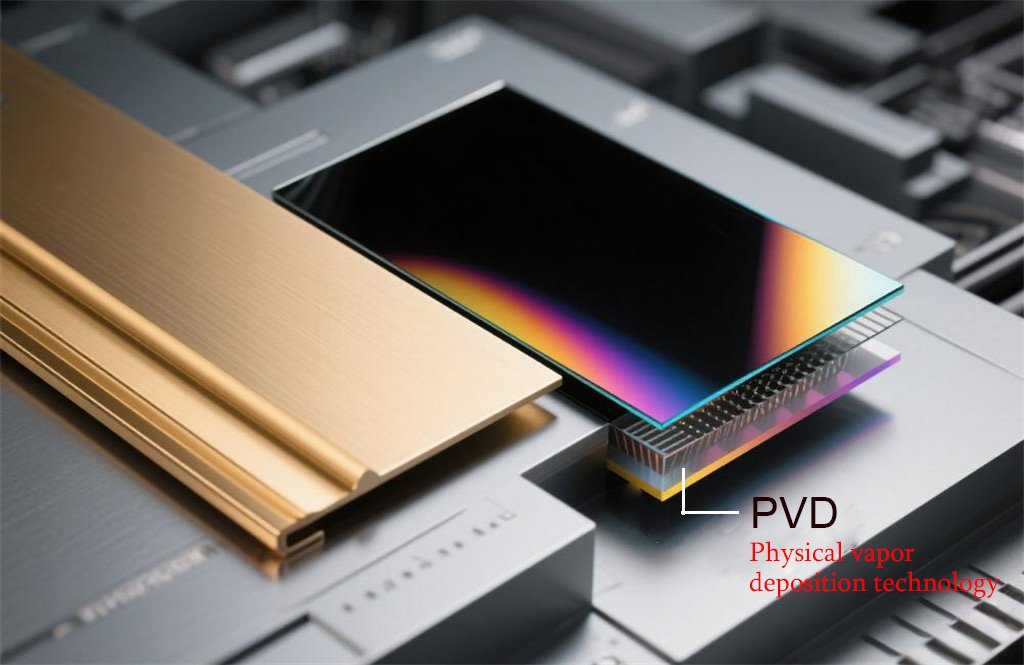
Vacuum plating, commonly referred to as PVD coating, uses a completely different technology.
Instead of depositing the coating in a liquid solution, the process takes place inside a vacuum chamber. Under controlled vacuum conditions, coating materials are vaporized and deposited onto the surface of the jewelry, creating a thin and highly controlled coating.
PVD technology is widely used for stainless steel products because it can create a durable surface while maintaining a high-quality appearance.
For stainless steel jewelry, PVD is particularly suitable for products where color stability, wear resistance, and long-term appearance are important.
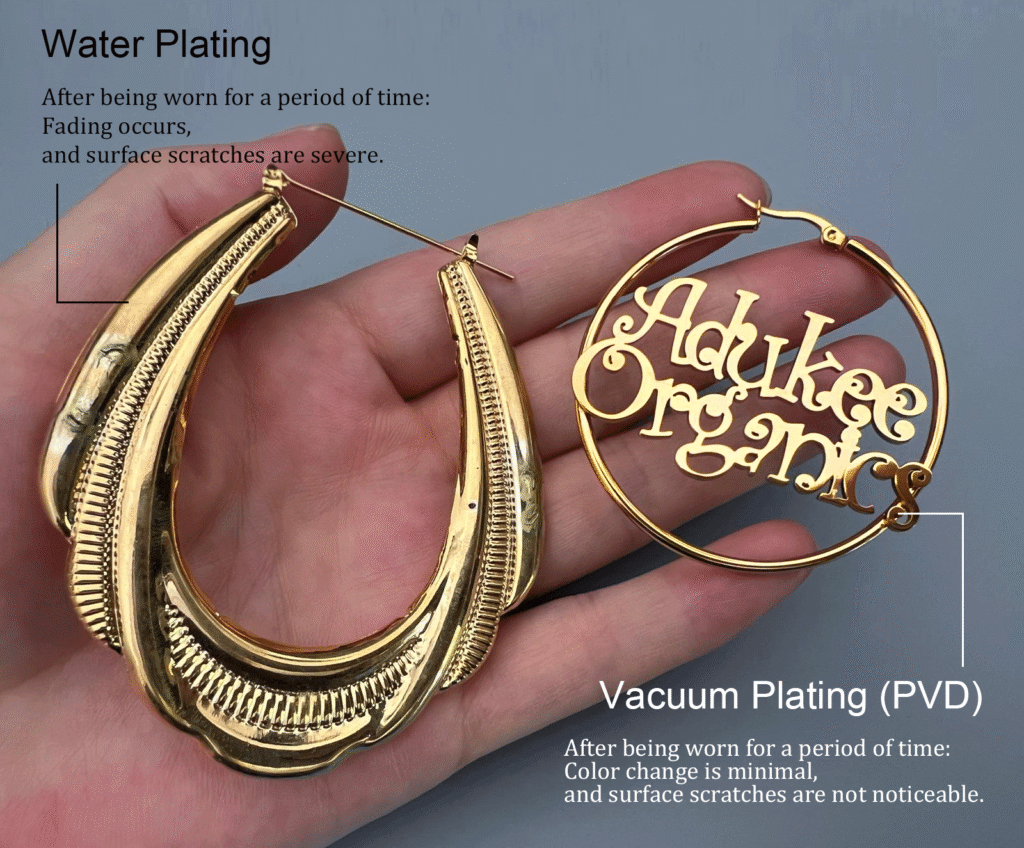
Water Plating vs. Vacuum Plating
The main differences can be summarized as follows:
| Feature | Water Plating | Vacuum Plating (PVD) |
|---|---|---|
| Plating environment | Liquid solution | Vacuum chamber |
| Coating consistency | Depends on solution and process control | Highly controlled |
| Wear resistance | Generally moderate | Generally higher |
| Color consistency | Can vary with production conditions | Highly consistent with proper control |
| Adhesion | Depends on substrate and preparation | Strong coating adhesion when properly processed |
| Suitable for stainless steel | Yes | Excellent |
| Chemical consumption | Relatively high | Lower liquid chemical use |
| Environmental impact | Requires management of plating wastewater | Cleaner production process |
| Long-term surface performance | Depends heavily on plating thickness and process | Generally excellent |
| Suitable for premium collections | Application dependent | Highly suitable |
The exact performance of any plating method depends on the base material, surface preparation, coating material, coating thickness, equipment, and quality control. However, PVD generally provides a stronger and more stable solution for stainless steel jewelry.
1. Better Wear Resistance
One of the biggest advantages of PVD vacuum plating is its excellent wear resistance.
Jewelry is constantly exposed to friction. Rings, bracelets, necklaces, and other frequently worn products can come into contact with skin, clothing, bags, tables, and other surfaces.
A decorative coating that looks beautiful when new may gradually lose its appearance if it is not sufficiently resistant to wear.
PVD coatings are designed to form a dense and durable surface layer. With the right coating material and process parameters, PVD can provide significantly better resistance to everyday wear than many conventional decorative plating processes.
This makes PVD particularly attractive for stainless steel jewelry intended for regular use.
2. More Stable Color and Finish
Color consistency is extremely important for jewelry brands and wholesalers.
When a customer orders the same product in multiple batches, the color should remain as consistent as possible from one production run to another.
PVD is performed in a controlled vacuum environment, allowing manufacturers to precisely control important parameters during the coating process.
This helps achieve:
- Consistent color
- Stable surface finish
- Better batch-to-batch consistency
- More predictable production results
For brands developing a long-term product collection, this consistency can make a significant difference.
3. Stronger and More Durable Surface
The quality of a jewelry coating is not only about its color—it is also about how well the coating remains attached to the surface.
PVD coating can create a dense, strongly bonded surface when the jewelry is properly polished, cleaned, pre-treated, and coated.
This is especially beneficial for stainless steel jewelry because stainless steel provides a strong and stable substrate for PVD coatings.
As a result, PVD can help jewelry maintain its original appearance for a longer period under normal use.
4. Excellent Choice for Stainless Steel Jewelry
Stainless steel has become increasingly popular in the jewelry market because it combines durability, affordability, and a modern appearance.
However, the quality of the final product depends on more than the steel itself.
The surface treatment is an important part of the manufacturing process.
For stainless steel jewelry, PVD is particularly well matched to the material because it can provide a durable decorative coating without relying on the same type of liquid plating process used in conventional electroplating.
This makes PVD a preferred surface treatment for many stainless steel jewelry applications, including:
- Necklaces
- Bracelets
- Rings
- Earrings
- Pendants
- Chains
- Jewelry accessories
5. A More Environmentally Responsible Process
Environmental considerations are becoming increasingly important for international jewelry brands and buyers.
Traditional water plating uses liquid chemical solutions, which means manufacturers must properly manage plating chemicals and wastewater.
PVD vacuum plating operates in a vacuum environment and significantly reduces the need for traditional liquid plating baths.
This can help reduce the use of plating wastewater and improve the cleanliness of the production process.
For brands that are increasingly concerned about responsible manufacturing and supply-chain sustainability, PVD can therefore offer an important advantage.
6. Better Choice for Long-Term Product Collections
For B2B buyers, the lowest initial production cost is not always the most important consideration.
A product that looks attractive at the beginning but loses its finish quickly can lead to:
- Customer complaints
- Returns and replacements
- Inconsistent product quality
- Negative reviews
- Additional after-sales costs
- Damage to brand reputation
For this reason, many brands prefer to evaluate jewelry based on its overall value over its product lifecycle, rather than simply comparing the initial unit price.
PVD can offer a higher-value solution when durability, appearance, and consistency are important purchasing criteria.
Does Vacuum Plating Mean the Jewelry Will Never Fade?
No plating process should be described as completely permanent.
The actual performance of PVD jewelry depends on many factors, including:
- Base material
- Surface preparation
- Polishing quality
- Coating material
- Coating thickness
- Vacuum equipment
- Processing parameters
- Quality control
- How the jewelry is worn and maintained
For example, rings and bracelets generally experience more friction than necklaces or earrings.
Therefore, professional manufacturers should evaluate the appropriate plating process according to the product design and intended use.
At the same time, high-quality PVD vacuum plating generally offers better wear resistance and color stability than conventional decorative water plating, making it an excellent choice for many stainless steel jewelry products.
Which Plating Method Should You Choose?
There is no single plating technology that is suitable for every jewelry product.
Water plating can be a good choice when a particular color, finish, or cost target is required.
PVD vacuum plating, however, is especially suitable when the priority is:
- Better wear resistance
- Stable color
- Consistent quality
- Strong surface performance
- Stainless steel jewelry
- Long-term product collections
- Premium product positioning
- More responsible manufacturing
For brands and wholesalers looking for stainless steel jewelry with a combination of appearance, durability, and production consistency, PVD vacuum plating is often the better choice.
Why Choose a Manufacturer with Professional Plating Capabilities?
The plating technology itself is only part of the equation.
A high-quality PVD finish also depends on the manufacturer’s ability to control the entire production process—from material selection and polishing to cleaning, surface preparation, vacuum coating, inspection, and final quality control.
For B2B jewelry buyers, choosing an experienced manufacturer can help ensure more consistent results across samples, bulk orders, and future production runs.
At our factory, we focus on stainless steel jewelry manufacturing and provide professional surface treatment solutions, including PVD vacuum plating, to meet different product designs and brand requirements.
Whether you are developing a new collection, looking for OEM/ODM manufacturing, or sourcing jewelry for wholesale, we can work with you to select the appropriate material, finish, and production process for your products.
Looking for a reliable stainless steel jewelry manufacturer? Contact us to discuss your next collection.